A new paradigm for AI silicon to power human progress. Reducing the cost of intelligence by 1,000x.
TEAM
Frontier AI lab solving the hardest problems in silicon.

The team brings together applied researchers, production engineers, and operators working across AI, physics, chip design, and formal methods, including a co-designer of Haskell and C#, co-inventors of TensorFlow Quantum, architects of Google's first production-scale AI deployments, builders of Palantir Foundry, co-founders of Meta's Probability team, and Commodore's former CTO.

On the silicon side, the team has delivered AI accelerators at Graphcore, complex CPU and GPU IP at NVIDIA and Apple, and successful tapeouts across analog and mixed-signal designs. Normal’s operators have built teams and functions from 0-1 at Google X, Palantir, and high-growth deep tech companies, taking frontier work to market.

PLay Video
This team has built a leading AI platform for silicon engineering, deployed with the world's largest semiconductor companies, advanced a thermodynamic hardware program from theory to working silicon, and published research in Nature and at IEEE on physics-based computing and uncertainty quantification. Normal's software and hardware converge by design, each accelerating the other.
NORMAL EDA
AI platform for collaborative silicon engineering.
Structured representations of the chip
The Ontology grounds downstream collateral generation in a source of truth.
Intelligent Verification Planning
Normal EDA structures its understanding of specification documents into a hierarchical test plan with traceability between source docs and tests.
Generate Stimulus
Convert the test cases into System Verilog stimulus, run simulations, and track coverage within Normal CLI.
Normal EDA builds an understanding of your design intent and uses it to generate, verify, and optimize engineering artifacts — learning continuously from your team's feedback.
NORMAL ASICs
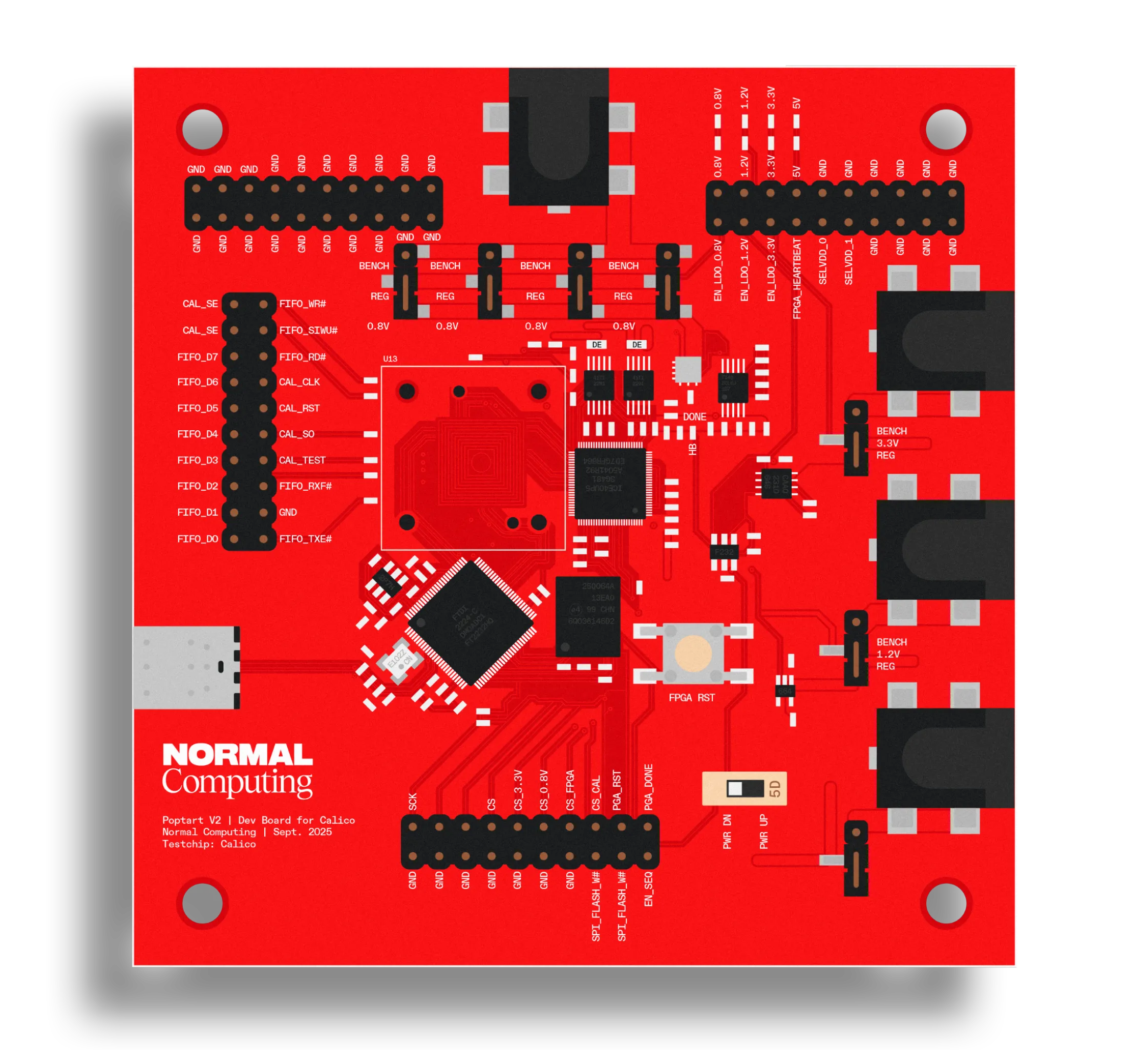
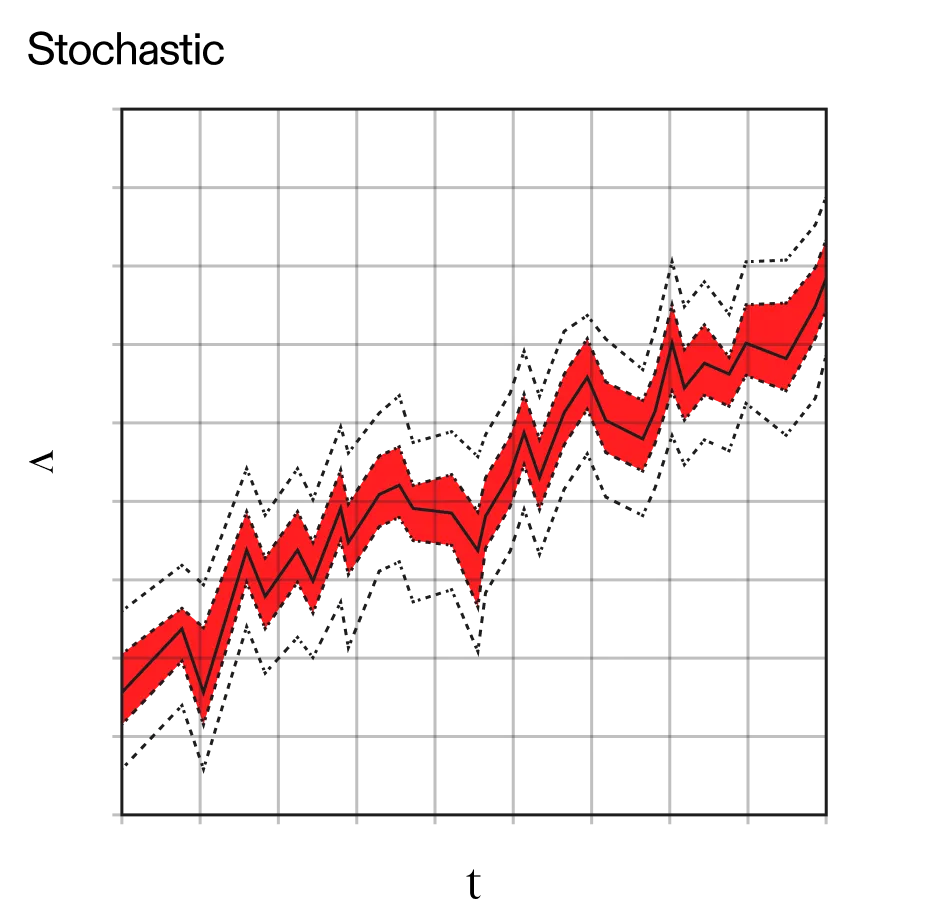
Normal’s physics-based ASICs relax the assumptions made in traditional computing, allowing for stochastic, stateful, and asynchronous computing, unlocking orders-of-magnitude more efficient compute.
As Normal EDA makes the chip design process look more like software, Normal ASICs explores what that new paradigm makes possible - applying AI to silicon and silicon to AI to enable ultra efficient ASICs for every workload.
THE CO-DESIGN ERA
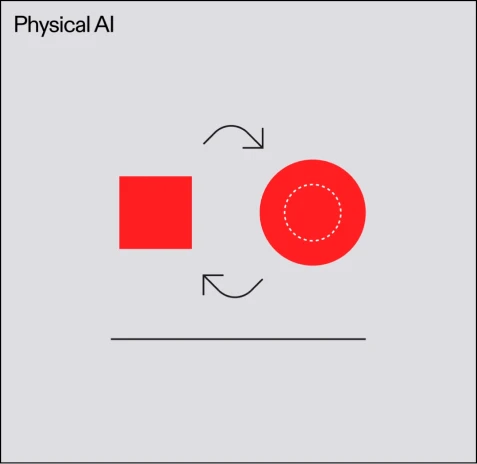
We envision a world where software and silicon share the same physics, fundamentally changing how hardware is built.
Hardware
applications
We believe that ASICs of the future will converge with physics. Cutting-edge GenAI models already look like dynamical equations of physical systems. The most effective hardware will be built to reflect those same principles.
The semiconductor industry’s leading companies use Normal EDA to scale new hardware and enable 2x faster time-to-market
GET in Touch
Writing
Insights & breakthroughs, shaping the future of computing.
All posts
4.23.2026
From Specifications to Formal Models: Autoformalizing Memory Chips with DRAMBench
Read more
Research
All
3.25.2026
Fortune Exclusive: Normal Computing raises $50M from Samsung Catalyst to tackle soaring AI chip costs and power demands
Read more
Press
All
3.25.2026
Normal Computing Raises $50M Led By Samsung Catalyst to Accelerate Silicon Design and Solve AI Hardware Energy Crisis
Read more
Announcements
All
3.2.2026
Building an Open-Source Verilog Simulator with AI: 580K Lines in 43 Days
Read more
Engineering
All
1.12.2026
A Complete Decomposition of Stochastic Differential Equations
Read more
Research
All